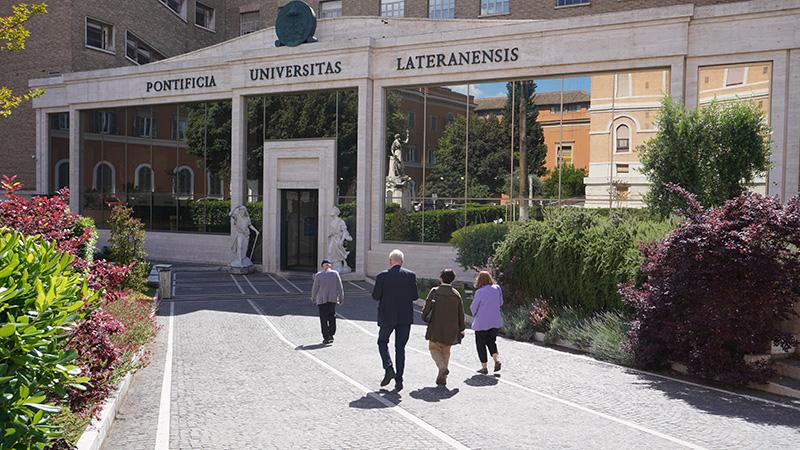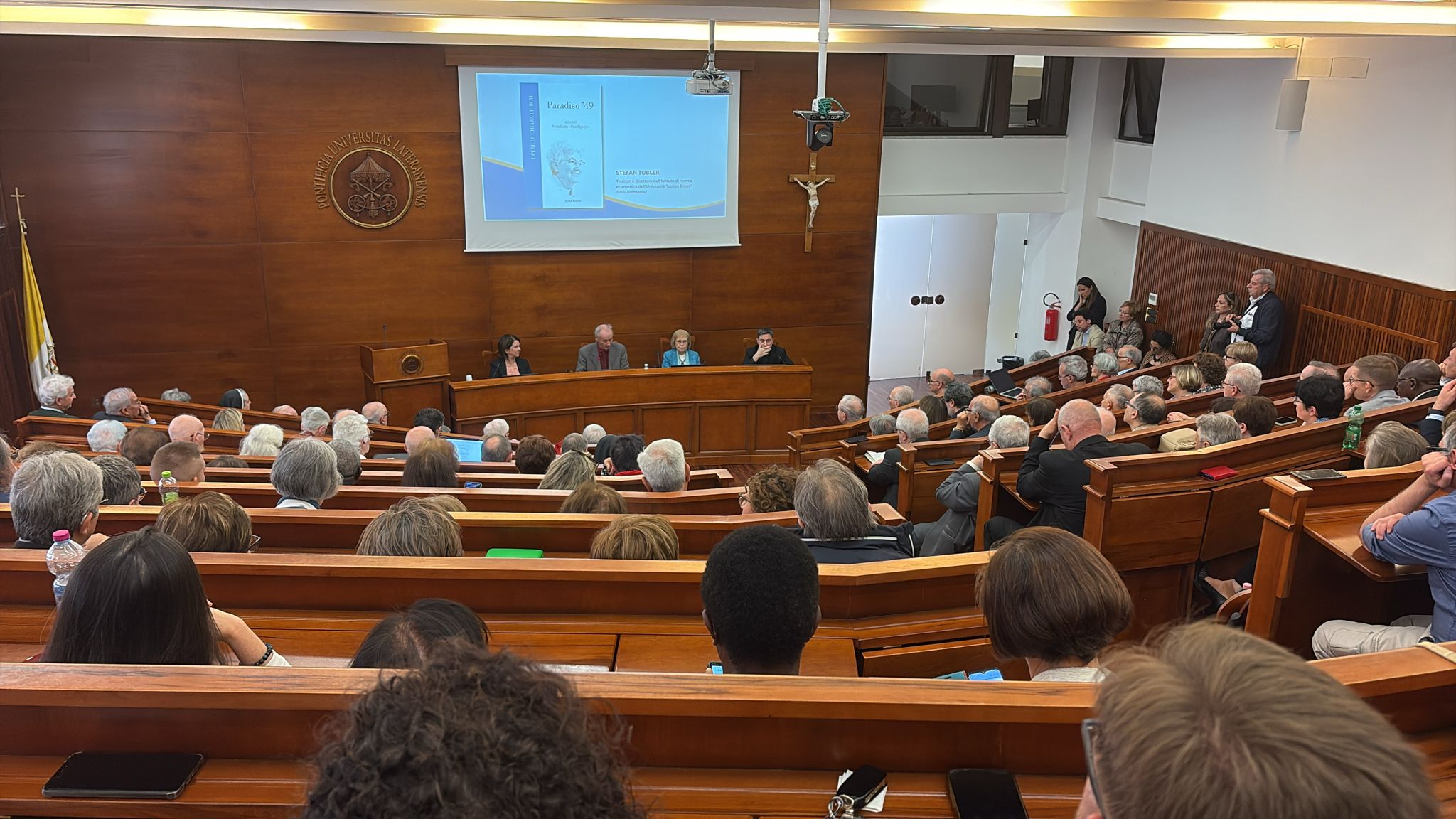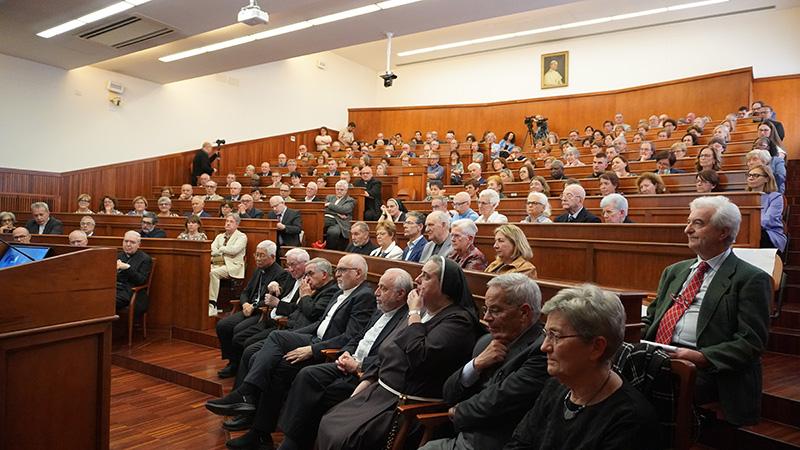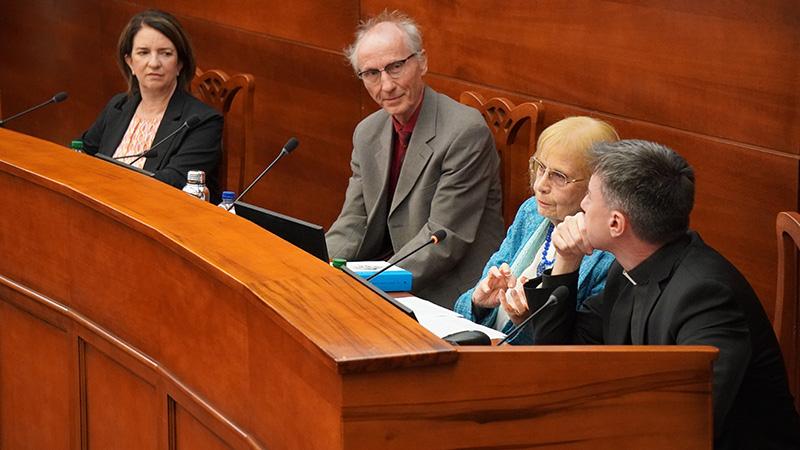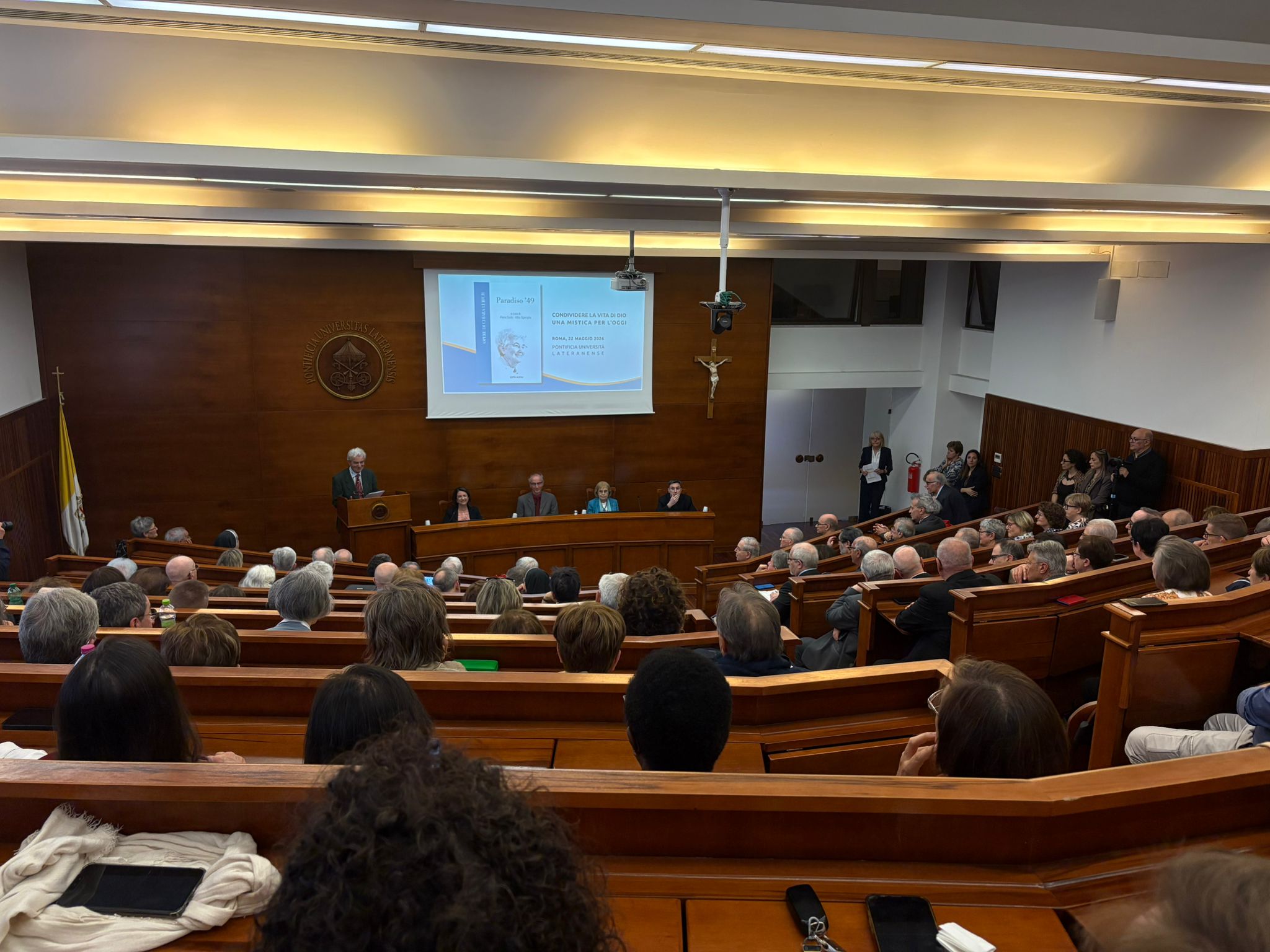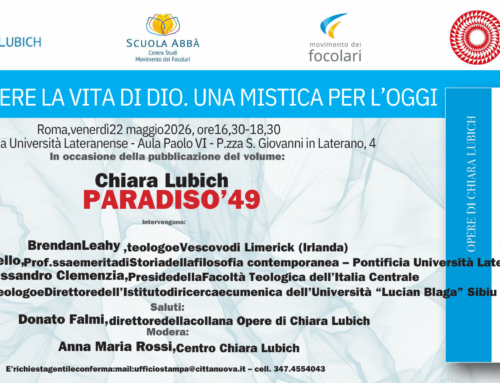


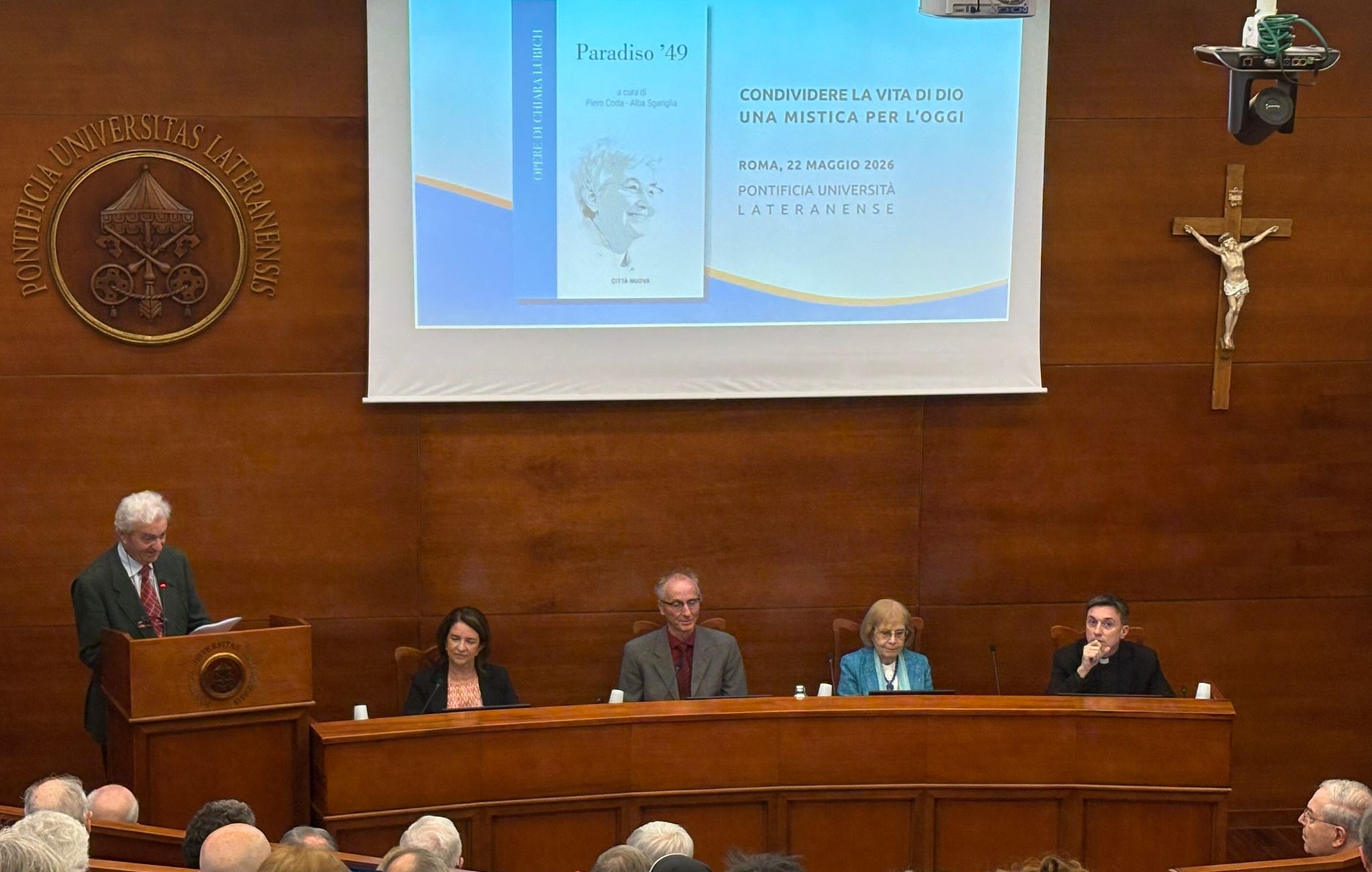
On 22 May 2026, the launch of the volume Paradise ’49 by Chiara Lubich — published by Città Nuova and the Chiara Lubich Centre — took place in Rome, within the prestigious setting of the Paul VI Hall at the Pontifical Lateran University.
The event was attended by distinguished figures from ecclesiastical, civil and academic circles who gathered to welcome a publication that marks a milestone in the “Works of Chiara Lubich” series. Access to this collection of writings today is due to the invaluable work of the Chiara Lubich Centre, which preserves the historical record and original documents of the Focolare founder and promotes rigorous study of her thought and unique spiritual contribution.
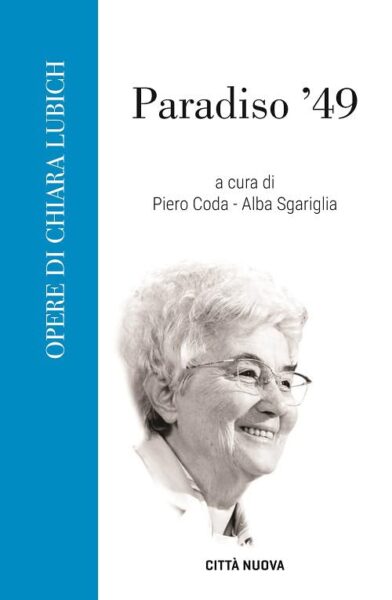
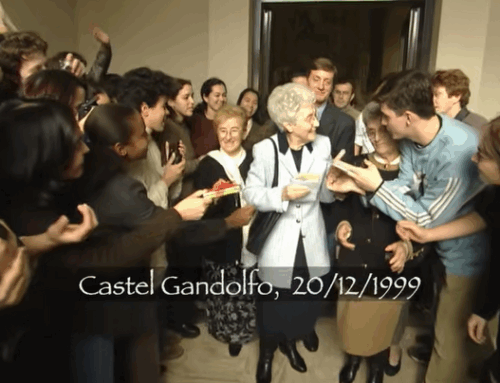
Foto Chiara Lubich
© Horacio Conde – CSC Audiovisivi
Co-editors of the book Piero Coda and Alba Sgariglia present a chronological and systematic collection of writings—largely previously unpublished—dating from 1949–1951, a period marked by a profound mystical experience lived by Chiara Lubich and shared with her initial group of companions.
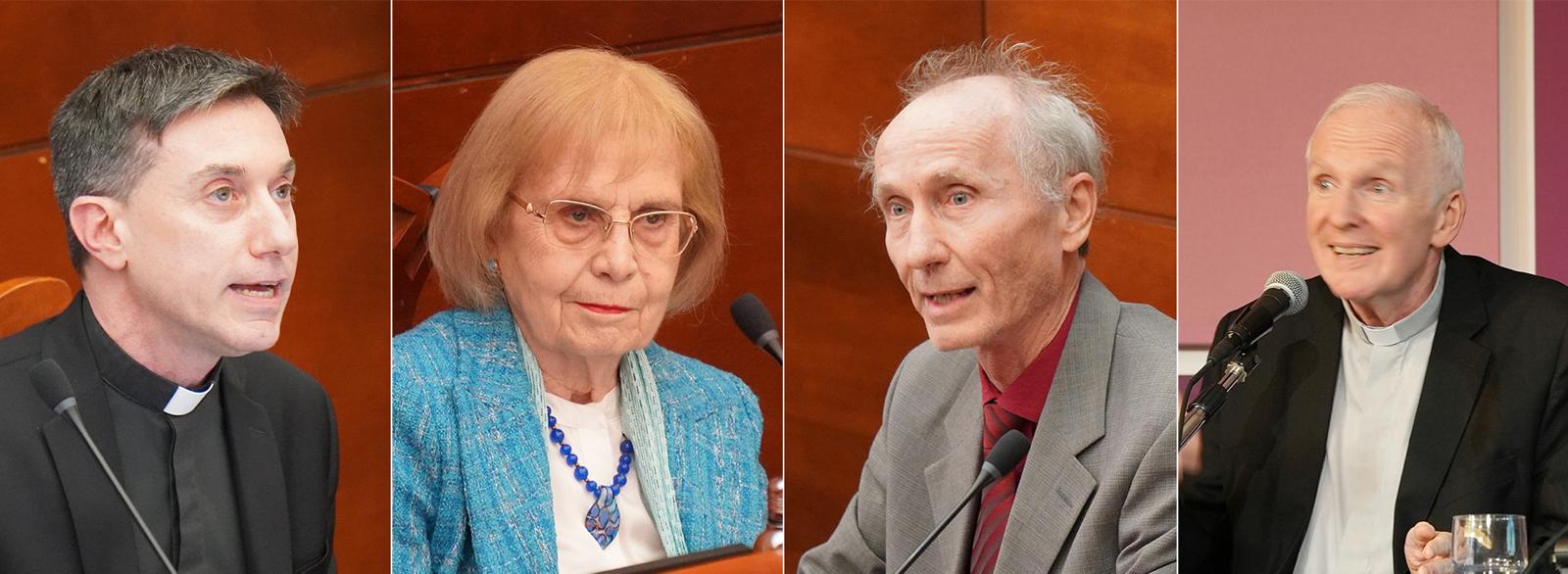
Among the many contributions from the speakers, Prof. Angela Ales Bello (Professor Emeritus of the History of Contemporary Philosophy at PUL) highlighted the concept of “always being on the journey”. The distinctive hallmark of Lubich’s mysticism lies precisely in its extraordinary incarnation: it is not an ecstasy that isolates one from the world, but rather the ability to live the experience of Paradise fully immersed in the concrete reality and simplicity of daily life, demonstrating that the divine dimension is accessible in the here and now of ordinary existence.
In a vein of profound theological continuity, Prof. Alessandro Clemenzia (Dean of the Theological Faculty of Central Italy) interpreted the text of Paradise ’49 as a powerful expression of the “contemporaneity” of Christ. Jesus does not belong to the past; rather, He becomes a contemporary to humanity in every age, entering directly into the events and intricacies of history. From this presence springs the possibility of “dwelling” in God—a vital meeting point created and manifested through human relationships which are grounded in mutual of love.
The theologian Stefan Tobler (Director of the Institute for Ecumenical Research at “Lucian Blaga” University in Sibiu) enriched the discussion by highlighting the intrinsically communal nature of this spirituality. The collective experience lived within the Focolare Movement is not merely a social experiment but constitutes a genuine ecclesial experience, in which the communion among members becomes a living reflection of the Church itself.
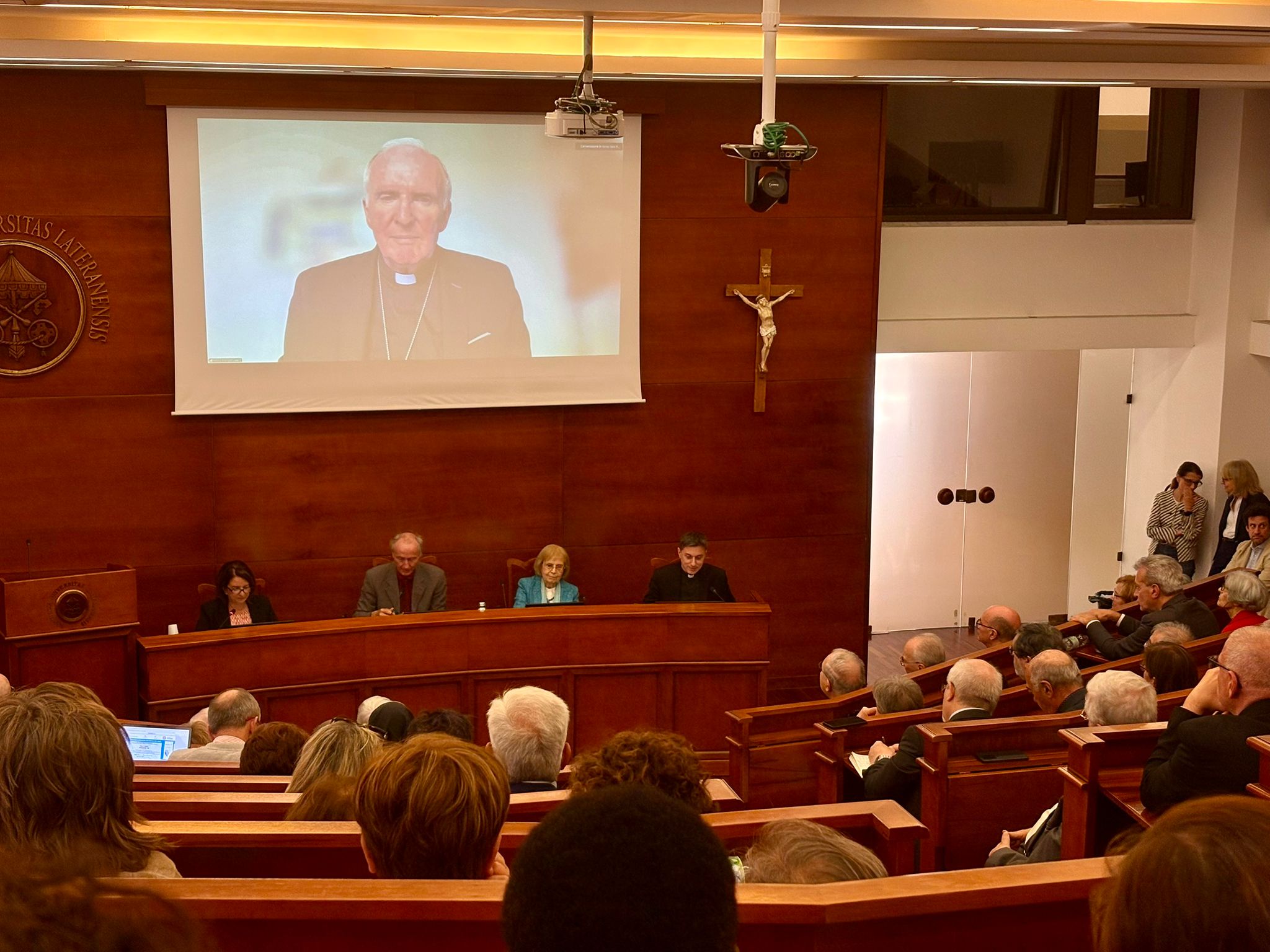
Joining via live stream from Ireland, Bishop and theologian Brendan Leahy enriched the discussion by highlighting the Church’s nature as an authentic relational space of God. He emphasized that Jesus Forsaken—the beating heart of Lubich’s entire spiritual and mystical experience—is not merely a theological reference point but serves as the living source and very form of the Church, capable of regenerating community bonds through the mystery of self-giving.
The meeting, moderated by Anna Maria Rossi of the Chiara Lubich Centre, reaffirmed that Paradise ’49 is not simply a memory of a past event, but a theological lens and a guiding light capable of engaging with the challenges of today.
redazioneweb@centrochiaralubich.org